
 Facebook
 X
X
 Pinterest
 Copy Link
If you’ve been following the headlines, you’ve probably seen a steady stream of stories about inflation, elevated mortgage rates, and growing housing inventory. It’s understandable if you’re wondering whether a housing market crash is around the corner.
While no one has a crystal ball, the data tells a much different story.
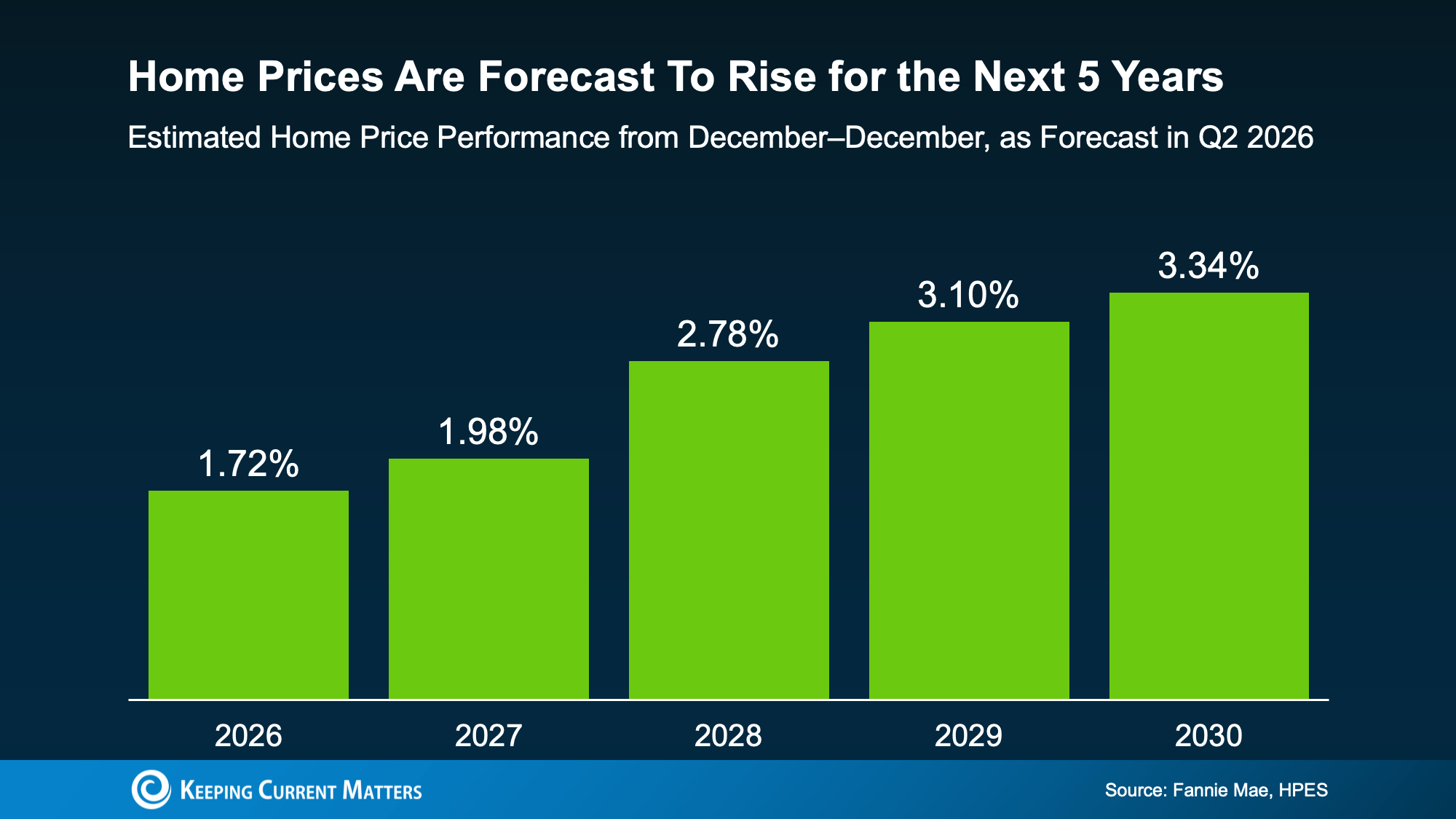
Home Prices Are Still Expected to Rise
Buyer demand has softened compared to the frenzy of 2021 and 2022. Homes are taking a bit longer to sell, buyers have more negotiating power, and inventory has been gradually increasing.
But none of those factors alone point to a market crash.
In fact, two of the most respected names in housing finance – Fannie Mae and Freddie Mac – continue to project modest home price appreciation over the next several years. While they don’t always agree on every detail, they’ve historically done a solid job forecasting long-term housing trends.
In other words, despite inflation, higher-than-normal interest rates, and more homes hitting the market, the expectation is that home values will continue to inch upward – not fall off a cliff.
What This Means for Buyers
If you’ve been waiting for prices to crash before purchasing a home, it may be worth reconsidering that strategy.
Yes, mortgage rates remain higher than many buyers would like. And while there’s always a chance they’ll decline somewhat, broader economic conditions suggest we shouldn’t expect a dramatic drop anytime soon.
For many buyers – especially first-time homebuyers or homeowners who have outgrown their current home – the better strategy may be to purchase when you’re financially ready, begin building equity, and refinance later if and when rates come down.
What This Means for Sellers
The market has undoubtedly shifted from the ultra-competitive seller’s market we experienced a few years ago.
That doesn’t mean sellers can’t achieve excellent results.
Today’s market simply requires a different approach.
Strategic pricing, professional marketing, thoughtful preparation, and strong negotiation matter more than ever. Buyers have more options, which means the homes that stand out – and are positioned correctly from day one – continue to sell quickly.
In fact, most of my listings this year have sold in less than two weeks. That’s not luck. It’s the result of careful planning and execution before a home ever hits the market.
Every Real Estate Market Is Local
One of the biggest mistakes people make is assuming the national housing market reflects what’s happening in their own neighborhood.
Residential real estate is incredibly local.
One ZIP code can strongly favor sellers, while another just 20 miles away gives buyers considerably more leverage. School districts, inventory levels, price points, and local demand all create unique market conditions.
That’s why national headlines should be viewed as context – not as a substitute for local expertise.
Thinking About Making a Move in Minnesota?
Whether you’re buying your first home, upsizing, downsizing, or simply exploring your options, the most valuable first step is understanding your local market.
There’s no pressure and no obligation – just a conversation about your goals and what today’s market means specifically for you.
If you’re considering making a move this year or next, I’d be honored to help you navigate the process with clear guidance, thoughtful strategy, and an approach centered on your best interests.
